© 2026 Institute for Biotechnology and Medicine Industry & Research Center for Biotechnology and Medicine Policy

2018-08-14
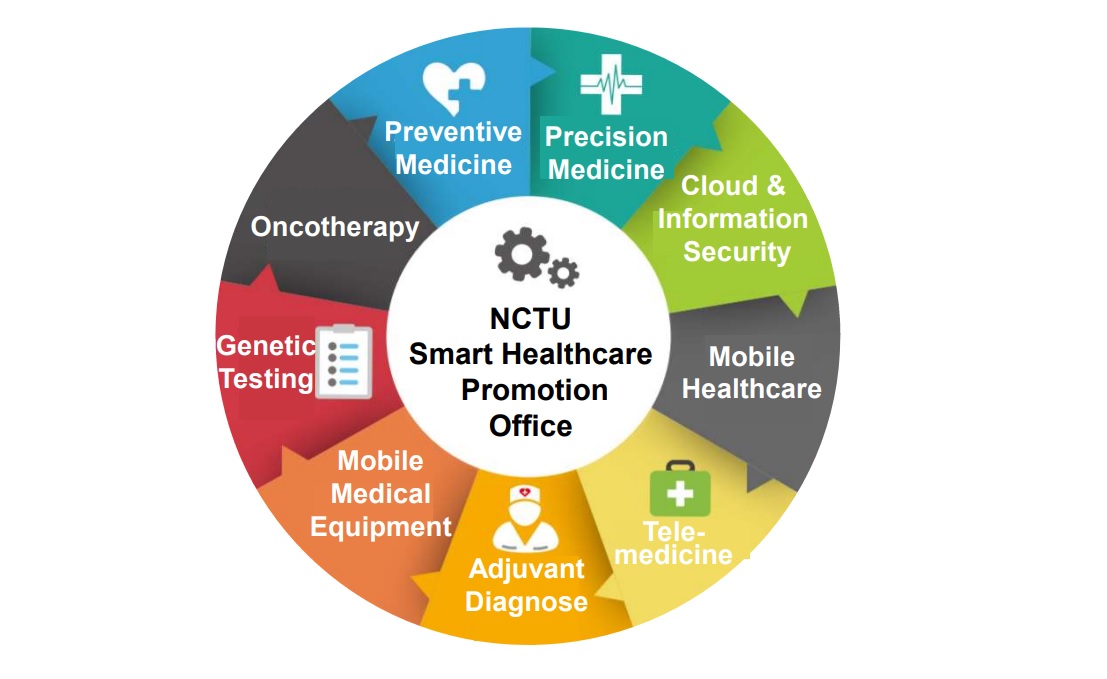
Smart Healthcare Promotion Office of National Chiao Tung University (NCTU) has focused on business incubation and acceleration in two major fields: smart healthcare and precision medicine. NCTU is now home to one translational research center and seven core research laboratories in biomedicine that coordinate interdisciplinary people and resources in biomedicine, AI, IOT, big data, electronics, mechanical engineering, and materials. Its aim is to actively accelerate the commercialization of frontier technologies. With over one hundred top scholars from different fields participating, NCTU has begun over one hundred cutting-edge research projects and the joint development of several dozens of technology with international partners. In Taiwan, NCTU is partnering with 7 key medical institutions and medical centers to launch clinical studies.
Incubator Brings Industry and Medical Experts to Clinical Applications
The incubation center has helped spawn over 100 startups to-date, with its Center of Industry Accelerator and Patent Strategy facilitating international connections. One representative projects is the combining of VR with brainwave sensing technology. A team from NCTU researching glaucoma-sensing brainwave technology collaborated with international experts in brain science and glaucoma to develop an early detection technique for glaucoma or other optic neuropathies. Currently, the technology can detect a 10% deterioration in the optic nerve and is being developed toward becoming a more accurate and affordable rapid diagnostic test.
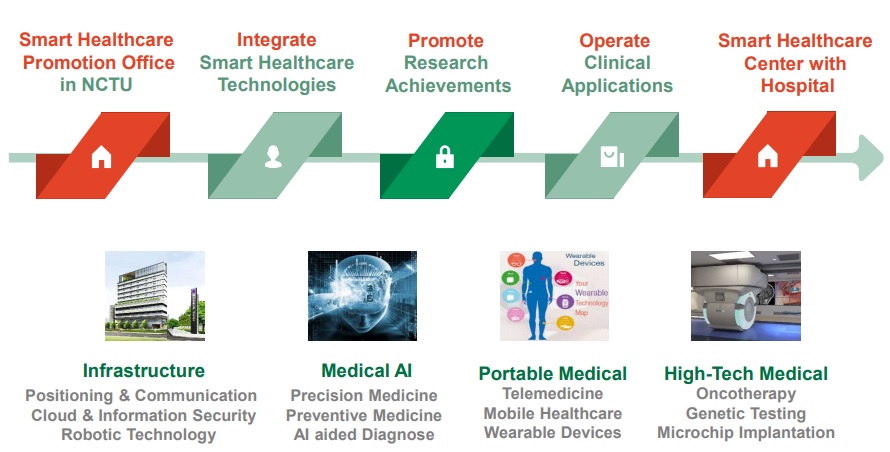
NCTU Professor Yi-Pai Huang noted that recently, NCTU has had breakthroughs in smart healthcare, including AI, wearable smart medical devices, and advanced medical devices. NCTU has continued to develop precision medicine by integrating imaging, physiology, genetics, and big data from health records.
(Editing by Jim Shih, Research Center for Biotechnology and Medicine Policy)